Friday, 18 April 2014

18 April 2014, Barnsley Pals Project, Day 5

The sunny weather came back today and it brought out a good team of volunteers! We had a chap called John who's great-grandfather had served in the Barnsley Pals and had actually trained at the camp, so it was nice to be able to introduce him to the areas his ancestor would have known for a few months one hundred years ago! The work on cleaning the ablution blocks continued with most of the volunteers working on the central base.


This is the base with the interesting feature at the end, we realised that the two blocks either side of this block are much smaller with different features identifiable in the concrete. It may mean that this central block is for a different purpose than that of the other two, maybe a large shower block, whilst the other two house sinks? It is still too early to make conclusions however and the team has been mulling over these questions whilst they work.


The blocks appear to sit at the end of the marks in the grass that show where the barracks huts would have sat. You can see one of the marks below, the faint outline of a rectangle can just be seen in the darker green grass. There are at least six of these marks, along with six ablution block bases, so perhaps each barrack hut was served by a single ablution block.


Eight more grids were covered in the geophysics survey, we have completed nearly half of the total grids so far, so we are well on target at the moment!


Then at lunch the team had a well earned picnic break!


Cleaning of the third hut base that we are looking at in this work continued as well, this one is more overgrown than the others, so will take a little longer to complete.


However, some more features were quickly seen in the concrete, like these post holes, possibly for internal frames and the like.


On the central base a small pipe was discovered, set into the concrete, maybe this was a structural pole or a water pipe. It is difficult to know precisely at this stage without taking up some of the base to see where the pipe runs.


Amongst the finds today was this seasonal offering...


With work on the top base completed, it was photographed (while the sun lasted!) and the following pictures clearly show the features that we have encountered!


This is the drain outlet, possibly running to a soak-away.


The internal row of postholes that may be for a frame.


The second base was almost finished by the end of the day as well, so there is only the large amount of foliage to remove on the third base before we can record them all in correct archaeological fashion.


Another great day in the sun and lots of work finished off. Today we also had a visit from a young boy who, since talking to us about the First World War and the work we are doing, has given up his dream of being a footballer and now wants to be an archaeologist!!

Thursday, 17 April 2014

17 April 2014, Barnsley Pals Project, Day 4

Day four brought a cold and bitter wind with it, also an ill Christine, who was soon packed off home to bed. With Christine off site there was no geophysics carried out, so the volunteers continued cleaning the ablution block bases. Here Sue, Andy and Russell work on getting the remaining grass off the concrete.


The second block base was also cleaned back by Duncan, Lauren and Alex, the steps you can see on the right hand side are modern insertions created by the Scouts. This base is a different build as it appears not to have the same amount of post holes as the one higher up.


It also has an intriguing feature at the end, found by Duncan. We initially thought it was a communal bath, but as more was revealed it became more enigmatic.


Unfortunately, a large part of the structure has broken away, so we may never know what it was or what its function was.


Then in the afternoon Anne and Philip joined us for more cleaning and this speeded the process up somewhat!


With most of the grass off the top base certain structures and features can now be clearly seen, the post holes for a possible frame are more obvious, as is the guttering system.


The gutter runs around the entire block, emptying out on the bottom left of the picture. We have yet to examine this area, but there may be a soak-away in this area to stop the ground getting swampy with all the excess water. The post holes on both sides of the structure can clearly be seen, as can the line of them down the centre of the base. There is still a little more cleaning to do on this feature, but it is almost finished!


There is still quite a lot more to do, but we will be back tomorrow morning to continue the work, if you want to join us or are just interested in popping along for a chat, please do!

Wednesday, 16 April 2014

16 April 2014, Barnsley Pals Project, Day 3

Day three and there is still no let up in the sunny weather! We were joined by two new faces today, Mark and Sue, both eager to try out archaeological techniques. The team split into two and half of the group picked up where they had left off yesterday at the ablution block bases.


Duncan then arrived in style on this 1945 BSA motorbike, it certainly helped to add a military flavour to the day!


Back on the resistivity survey, Abbie and Sue walked the array through the grids. The team managed to complete nine squares, the current site record!


The good weather is certainly helping the speediness of the survey, that and the reasonably flat ground!


The ground is not as flat as it first seems and the site is full of interesting lumps and bumps, for example there is this rectangular cut into the road banking that lines up with a flat area immediately to the side. It is probably the surface for a long hut base, the survey should be able to pick up any disturbance below the ground here.


After lunch the teams swapped over and more and more was revealed of the concrete bases.


 More post holes were revealed in the concrete base, probably from a frame that held up the showers or the roof of the structure.


The post holes ran in a line across the edge of the base, interestingly there appeared to be square ones, inter-spaced with rectangular ones, the square holes look like they match up with a line of post holes down the centre line of the base. Is this the structure of a frame? Are the rectangular holes the remnants of the structure's exterior? It is difficult to tell at this stage and hopefully the full excavation may be able to answer these questions.


We have had very little in the way of military artefacts, it has mainly been domestic items, such as bottles and even tent pegs (from the Scout Camp!). However, today, Concrete Chris found this spent cartridge. Initial excitement was short lived as it was seen to be a modern NATO 7.62mm blank round, manufactured in 1985! How this has managed to get on site is a mystery, but it could have come from a group of re-enactors who possibly used the site for a demonstration.


By the end of the day the two bases that we are currently working on are coming along nicely, both have revealed structural elements that look like drainage systems, plus some of the features of their construction.


There is still quite a way to go before they can be recorded, but they are looking much better than when we started two days ago!


We will be back tomorrow for more work, so if you are interested in getting involved, then drop us a line at: info@elmetarchaeology.co.uk or keep checking back at this blog for further updates!

Tuesday, 15 April 2014

15 April 2014, Barnsley Pals Project, Day 2

Day two on the Barnsley Pals project began with another bright and sunny morning, our luck seems to be holding at the moment. We had another good turn out from the volunteers and they immediately picked up from yesterday with Andy and Stephen starting off on the resistivity survey. 


Despite there being a group of children using the site, they managed to get seven grids finished in no time at all!


The rest of us turned our attention to the extant ablution block bases, which needed a good clean...


These had been cleared off a few years ago, but grass and weeds had grown over them again.


However, you can still make out a few of the features in the concrete, like the drainage channels that run down either side of the structures.


So the team began work on clearing off the growth and exposing the concrete below. Again, this was aided by the lovely sunshine!


Other smaller features, such as post holes began to appear under the turf covering!


Chris cleaned off an entire corner to reveal a row of postholes, probably used to hold up the temporary walls of the washing facilities. You can also make out the drainage feature on the left hand side of the picture.


These concrete bases may have been cleaned before, but they have never been fully recorded in an archaeological manner and this is what this project hopes to achieve. We are expecting that there will be many more small features that need investigating on these three bases.


The work continued throughout the afternoon and was by no means completed, tomorrow will see more of the bases uncovered. Check back for further information in our next blog post! If you would like to get involved, please have a look at our website for details of volunteering: www.elmetarchaeology.co.uk

Monday, 14 April 2014

14 April 2014, Barnsley Pals Project, Day 1

Today saw the sun shine and Elmet arrive at Silverwood Scout camp for the first day of our surveying project that will attempt to delineate the training area of the Barnsley Pals in the First World War. The modern day scout camp is home to what was known as Newhall Camp, which housed the men of the 13th and 14th (Service) Battalions of the Yorks and Lancs Regiment. The men were drawn locally from Barnsley and stayed at the camp from late 1914 through to May 1915. This project is an attempt to locate hut bases and pillars for huts that may still remain in the ground using resistivity, we will also be cleaning the existing ablutions blocks and recording them archaeologically.
We had a good turn out from volunteers and needed to get the site gridded out ready for the geophysical survey.

The site was flagged up at 20 metre intervals by using the Pythagoras theorem to get right angles from a straight baseline. Fortunately we had a few students who had already done this work before, so that speeded up the process.


Soon, the entire site was covered in little red flags!


We had most of the site flagged out by the middle of the afternoon, so Christine demonstrated how to use the resistivity array to the volunteers.


Then they were given a go on the machine, under close supervision.

But they were soon up and running themselves!


So, we've had a great start to the first day, the sun shone all day and we even began the survey! If you are interested in joining in over the next two weeks, please contact us via email: info@elmetarchaeology.co.uk

Tuesday, 24 December 2013

2013 End of Year Round Up!

2013 has been a brilliant year for Elmet Archaeological Services Ltd! In fact, we have never been this busy since our formation in 2009! 

We began the year with a commercial archaeological evaluation at Thrybergh in Rotherham, in freezing conditions and even snow! Our annual Dearne Valley Archaeology Day took place in mid-February with over 100 attendees and 10 speakers. An array of presentations was delivered with local, national and international topics. 


Freezing conditions at Thrybergh

Soon after this the Hickleton Hall Prisoner of War project started which ran for a few months and ended with fieldwork on the POW camp itself. Alongside this project, a number of workshops were hosted on a wide range of archaeological topics from Osteoracheology to Artefact Illustration which were open to members of the public and archaeologists alike. 


Working in the sun at Hickleton Hall

 In May we continued the war theme but focused on First World War practise trenches. Visits to Redmires in Sheffield and Silverwood in Barnsley followed, as did a round of geophysics training with various local groups. These included our regular group from the Oaks Day Centre in Wath-Upon-Dearne. We also had our second commercial job, a geophysical survey and strip, map and record in North Yorkshire.


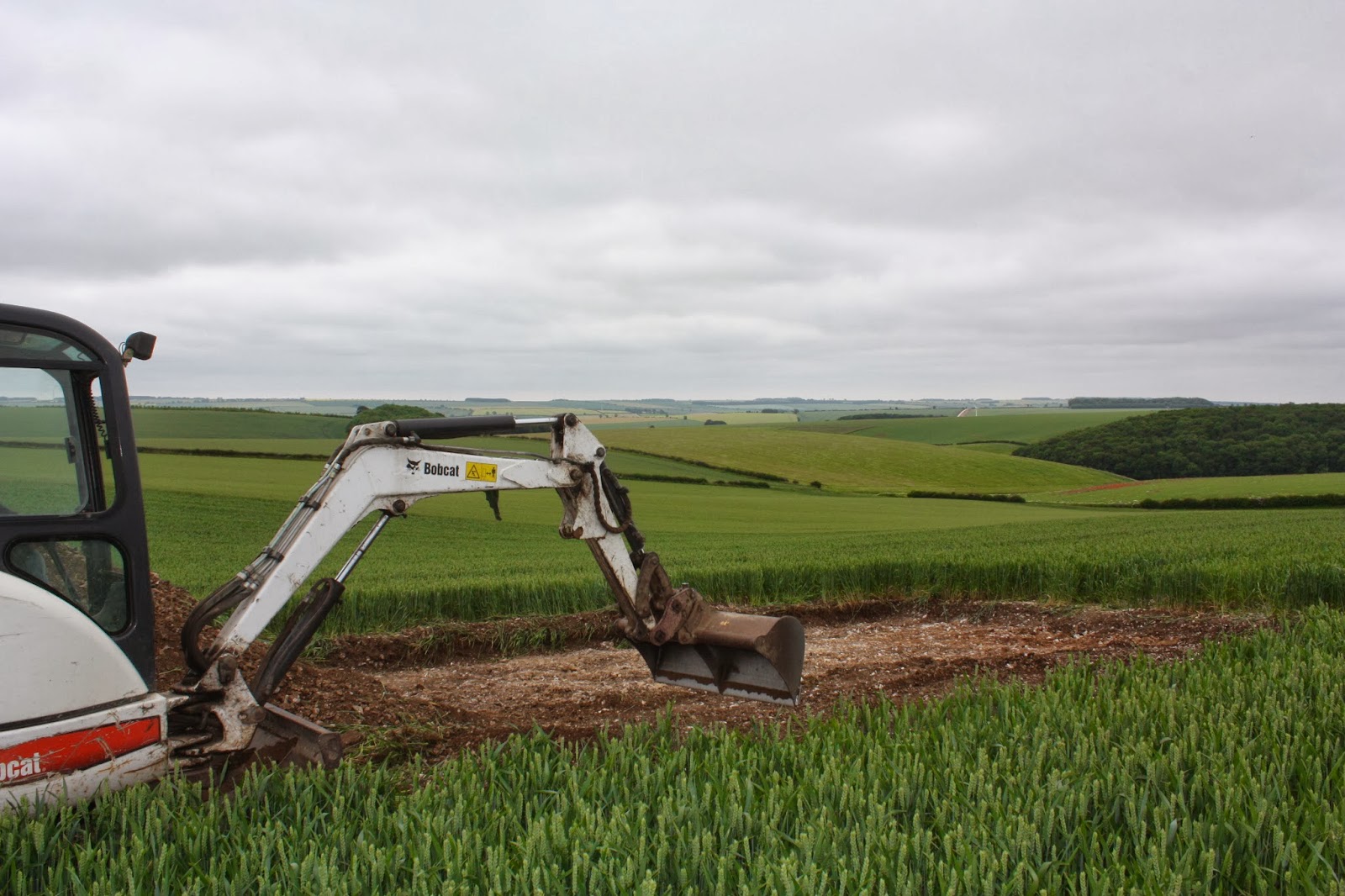
Beautiful views in North Yorkshire

Immediately following this Hickleton POW project had finished with two weeks of successful fieldwork in July and we were still out in the field, but at Sutton Common, near Doncaster with the University of Hull, trying to find evidence for the Mesolithic period. Christine then went down south to Dartington in Devon searching for more Mesolithic evidence of short-term habitation, again training University of Hull undergraduates in the skills of fieldwork. 


Students hard at work at Sutton Common

October saw us helping Rotherham Archaeological Society to try to locate a possible Roman Fort in Ulley, a project which engaged over a hundred volunteers and local enthusiasts! November was taken over with our final big event this year; the commercial strip, map and record of a cementation furnace in the historical heartland of Sheffield at Kelham Island. 


Great weather for November, at Kelham Island, Sheffield

We also had many smaller projects, we’ve visited schools, held workshops at our Wath offices and we also helped the Brinsworth Local History Group locate a Roman road! Not only that, but we currently host a weekly reminiscences group in our Wath office for older people and we have worked with the good people at Clifton Museum, Rotherham and made many links with other volunteer led organisations. 


The Brinsworth Local History group learn how to use a resistivity array

Currently we are working on several projects that will take us into the New Year; some with local history groups; a First World War project and the archaeological examination of a Norman castle. Not only this, but we have plenty more projects on the boil as well! As good as 2013 has been, we think 2014 will be even better for Elmet! 

Both Chris and Alex would like to take this opportunity to thank everyone who has helped us in any way this last year, either by helping out on one of our fieldwork opportunities, or just by generally supporting Elmet Archaeological Services Ltd throughout 2013. We couldn’t be this successful without you!